
You don’t have to mask here
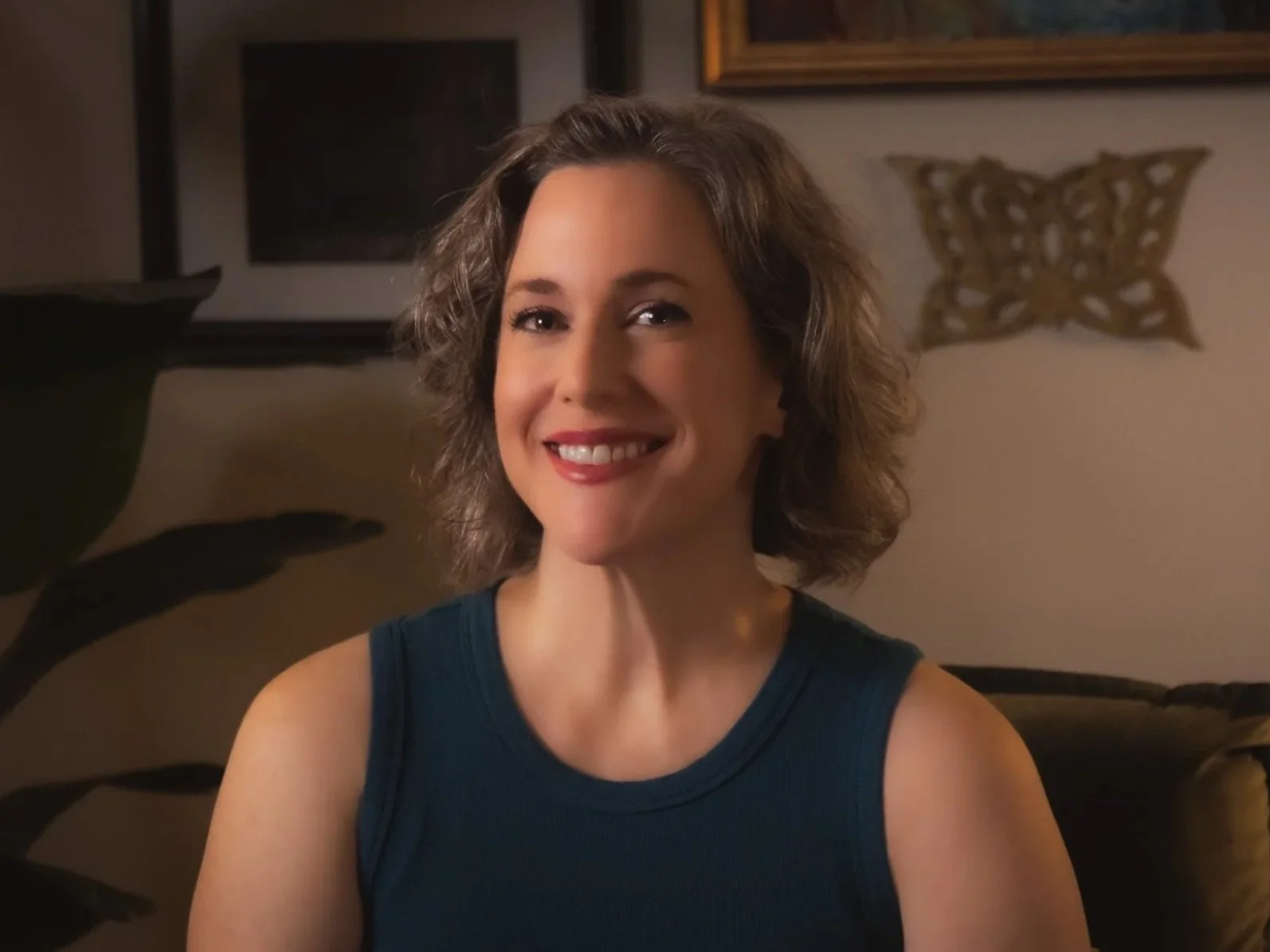
Meet K. Amanda Morris, MSW, LCSW-BACS, CFSW
AuDHD Therapist for Autistic, AuDHD & Neurodivergent Women Recovering from Emotional Abuse, Relational Trauma & Burnout.
I'm an AuDHD therapist and Licensed Clinical Social Worker with 25 years of experience, providing trauma-informed and neurodiversity-affirming therapy to women in Louisiana, Florida, and Virginia.
I’m Glad You’re Here. Hi, I’m Amanda.
I may look like an average, boring middle-aged white lady, but don’t let that fool you—there’s plenty of personality in here when you get to know me a little.
I’m AuDHD and GenX, which is to say I’m highly sensitive, have lots of quirks, can’t find my keys, and I question authority. I could try to sound all fancy and buttoned-up, but that’s not really me or how I work with clients. Hopefully, what you read will help you decide if I’ll work well with you. If you’re interested, the “professional” stuff is included towards the end.
A Baton Rouge Therapist Who Actually Gets It
I became a therapist 25 years ago to help other women who'd been through some shit and lived to tell about it. What I didn't know back then (and what took me way too long to figure out) was that I'm one of those women too. AuDHD, late-diagnosed, like a lot of the women I work with.
I spent decades feeling like an alien and being told I was "too sensitive," "too blunt," or "weird" long before I had language for why my nervous system worked the way it did. So when you tell me you're exhausted from masking, or that you can't always tell what's gaslighting and what's your actual difficulty reading social cues, or that late diagnosis is reframing things you used to blame yourself for — I won't need you to explain.
Asking for Help is Scary. I Happen to Hate It.
I could be dangling from a cliff by my fingers, with two enormous firemen hoisting me up to safety, and I'd still want to do it all by myself. But trying to do everything on my own left me struggling a lot harder than I needed to. Through my own therapy, I've discovered that life gets a whole lot better (and easier) when you allow people to help you.
And yet, vulnerability can be so hard when you don't know whom you can trust. I totally get that. Trust is earned and built over time. That's why we go at your pace.
Because of my own trauma history, it seems like it would be so much easier to help other people with their problems than to risk possible rejection. Here's what I've learned, though: asking for help is necessary, because we cannot possibly get through this life without it. And maybe the most important thing to accept is this: you are worth caring for.
Enough About Me. Let’s Talk About You.
There's no shortage of therapists in Baton Rouge. I specialize specifically in helping autistic, AuDHD, and neurodivergent women (and women who suspect they might be) who are exhausted, confused, and not sure who they are anymore.
Most of the women I work with have spent their lives being told they're "too sensitive" or "too much." They've built exhausting routines, scripts, and performances to be acceptable to other people. Many ended up in relationships where their partners weaponized those same words — and they're now trying to sort out what was abuse, what was masking, and what was always just them.
Maybe you've had therapy before, but it didn't really help. The therapist didn't get the sensory piece. Or they kept pushing you to "express yourself more directly" without understanding why that felt impossible. Or they just couldn't see what you were actually carrying.
Most of my clients look very put together on the outside…but internally feel anxious, unsteady, and unseen. They're often pulled in a thousand different directions, overwhelmed by expectations, and so used to masking that they're not sure who they are when no one's watching. If that's resonating, you're in the right place.
HOW I HELP
Clarity is What Makes Change Possible.
So much of what brings women to therapy is the exhaustion of not trusting themselves anymore: second-guessing their reactions, minimizing their pain, and wondering if they're the problem. Our work together creates space to slow that down.
We will look at what's actually happening in your life and relationships — the patterns that keep you stuck, the masking that leaves you depleted, the nervous system that's been running on high alert for years, the anxiety that comes from constantly bracing for what's coming next.
This isn't to analyze you. It's to help you understand yourself. This also isn't about me telling you what to do. It's about learning to trust what you already know and figuring out what you actually want.
WHO I WORK WITH
You Don't Have to Have All the Answers Or the “Right” Words.
You just have to recognize something in what you are about to read. I work with women throughout Louisiana, Florida, and Virginia who are navigating these exact challenges:
Autistic, ADHD, or AuDHD
You're diagnosed, self-diagnosed, or wondering. You're neurodivergent, or you've started to suspect you are. You've spent your life being told you're "too sensitive," "too much," or "overreacting." You're trying to sort out what's actually you, what's something you've been carrying, and what doesn't belong to you at all. You don't need a formal diagnosis to belong here.
→ Learn more about Therapy for Late-Diagnosed Autistic WomenRecovering from Emotional or Narcissistic Abuse
Your partner has criticized you, controlled your decisions, monitored your whereabouts, isolated you from people who care about you, weaponized your sensitivities, or used silent treatment and withdrawal to punish you. The relationship may involve cycles of love-bombing and devaluation, constant criticism, or gaslighting. You're trying to figure out what was abuse, what was masking, and what was always just you.
→ Learn more about Therapy for Emotional & Narcissistic AbuseCaught in People-Pleasing or Masking Patterns
You say yes when you mean no. You prioritize everyone else's needs over your own. You've built scripts and accommodations to be acceptable — and somewhere along the way, you lost track of what you actually want or need. Your self-worth got tied to keeping everyone else okay.
→ Learn more about Therapy for Anxiety & People-PleasingExperiencing Autistic Burnout or Chronic Dysregulation
You're exhausted in a way sleep doesn't touch. Sensory things you used to push through are unbearable now. You feel flat, foggy, or like you can't access yourself anymore. Your nervous system has been on high alert for years.
Questioning Your Reality
You're constantly second-guessing yourself, wondering if you're overreacting, or feeling like you're losing your grip on what's real. You doubt your own perceptions, memories, and feelings.
Feeling Stuck Between Staying and Leaving
Part of you wants to run, but another part holds onto hope that things will get better. You might be financially dependent, worried about your children, concerned about what others will think, or simply exhausted by the thought of starting over.
Ready to Reclaim Your Life
Despite the confusion and fear, you know something needs to change. You're tired of feeling small, invisible, and unworthy. You're ready to reconnect with yourself, trust your own judgment again, and build a life that feels authentic and safe.
BOOK A FREE 15-MIN. CONSULTATION
MY APPROACH
Therapy That Respects Your Nervous System
You don't need to be analyzed, fixed, or reshaped to fit into a world that wasn't built for you. My approach is trauma-informed, collaborative, and entirely paced by your comfort level. We will work together to slow things down, unmask safely, and help you reconnect with who you genuinely are.
Neurodiversity-Affirming Care
Your brain is wired differently, not broken. Traditional therapy models often force you to perform or work against your traits. Our environment is entirely performance-free, accepting self-diagnosis and honoring your lived truth.
We work collaboratively to understand your unique sensory profile, dismantle internalized shame from a lifetime of masking, and create specialized accommodations that prevent chronic dysregulation. This is a collaborative relationship where you remain the absolute expert of your own sensory, emotional, and social needs.
Accelerated Resolution Therapy (ART)
Some of what you are carrying lives in images and body sensations, not just words. ART is a brief, structured approach that helps your brain reprocess distressing memories using guided eye movements and visualization, while you stay fully in control the whole time.
You don’t have to retell your trauma in detail to get relief, and many people feel a real shift in just a few sessions. I use ART often with women recovering from emotional abuse and with late-diagnosed autistic women processing years of being told they were "too sensitive." If certain moments keep replaying or triggers keep hijacking your brain, this is one of the gentlest ways to loosen their grip.
→ Learn more about Accelerated Resolution TherapyMy Training
& Education
Master of Social Work from Louisiana State University.
Bachelor of Arts in Sociology with a minor in Psychology from Louisiana State University.
Licensed Clinical Social Worker and Board-Approved Clinical Supervisor in Louisiana #7223.
Licensed for telehealth in Florida #TPSW2396.
Licensed for telehealth in Virginia #0904014789.
• Specialized training in relational trauma & narcissistic abuse
• Trained in Accelerated Resolution Therapy (Basic)
• Trained in Trauma-Informed Therapy
• Trained in Neurodiversity-Affirming Treatment of Adults
• Member of the Therapist Neurodiversity Collective
• Member of the International Society of Accelerated Resolution Therapy
• Certified Financial Social Worker
25 years of clinical experience working with women navigating intense, unsteady, and confusing relationships and life patterns.
My approach to therapy is client-centered, trauma-informed, neurodiversity-affirming, and rooted in Attachment-Based Therapy, Client-Centered Therapy, Relational Therapy, and Psychodynamic Therapy.
