
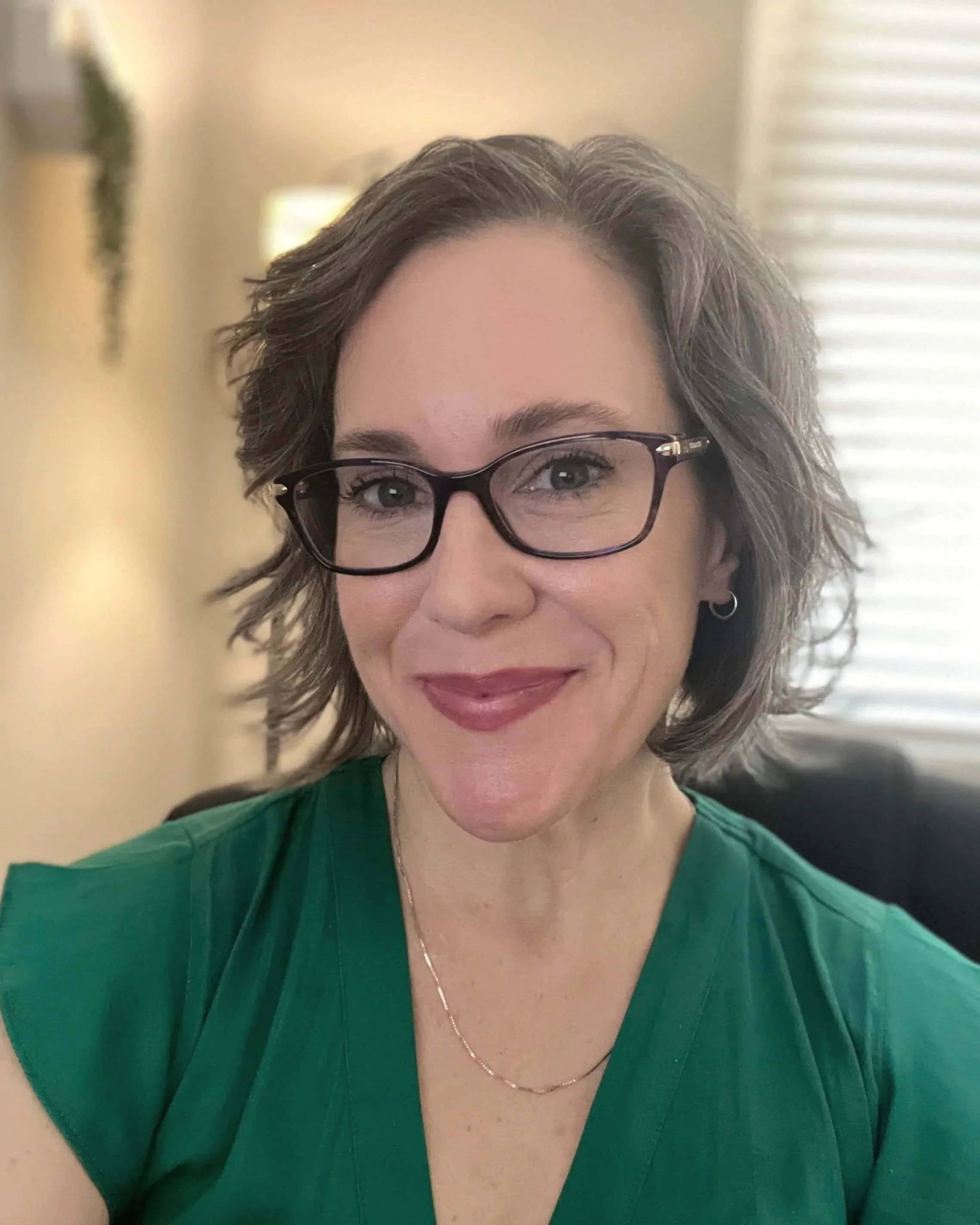
Amanda Morris, LCSW-BACS, CFSW | Licensed Clinical Social Worker-Board Approved Clinical Supervisor | Louisiana License: 7223
EMOTIONAL Abuse THERAPY in NEW ORLEANS
Online therapy for women untangling gaslighting, control and self-doubt. Neurodivergent-affirming, available anywhere in Louisiana.
You know something is wrong, but every time you try to name it, it slips away. He says you're remembering it wrong. Your friends think he's charming. And you're tired in a way sleep doesn't fix.
I'm Amanda Morris, an emotional abuse therapist for women in New Orleans and across Louisiana. I help you see what's been happening clearly, trust your own mind again, and decide what comes next at your own pace.
Is This Emotional Abuse, or Am I Overreacting?
If you're asking that question, take it seriously. Emotional abuse rarely announces itself. There are no bruises to point to, and the person causing the harm is often well liked, funny, even generous in public.
So you explain it away. He's stressed. You're too sensitive. It's not that bad, because it's never been physical. Many of the women I work with spent years telling themselves exactly that.
I work with emotional abuse, verbal abuse, psychological manipulation, coercive control and narcissistic abuse. Most often that's a partner, but it can also be a parent, a family member or a friend. You don't need to be sure it "counts" to reach out.
Signs You Might Be in an Emotionally Abusive Relationship
What s/he does:
Picks apart how you look, think, parent or run the house, then calls it "just being honest"
Rewrites what happened until you doubt your own memory
Goes cold or silent for days when you've "done something wrong"
Watches your phone, your spending or who you talk to
Swings between tender and cruel, so you never know which version is coming home
Turns every argument around until you're the one apologizing
What it’s doing to you:
You rehearse conversations in your head before you have them
You can't make small decisions without checking how he'll react
Your body stays braced: tight chest, upset stomach, poor sleep
You've pulled away from friends because explaining feels impossible
You feel numb, or like you're watching your own life from a distance
You're capable and smart everywhere else, and you can't understand how this happened to you
When You're Autistic or AuDHD, You May Be More Vulnerable To Emotional Abuse
Many of the women I see in my emotional abuse work are autistic, ADHD or AuDHD. Some have a diagnosis, some are only starting to wonder. Either way, a few patterns come up again and again.
You learned early to trust other people's version of reality over your own. That makes gaslighting land harder.
Masking made you very good at accommodating. You read the room, adjust and keep the peace, often at your own expense.
You take people at their word. Promises to change feel real, because you'd mean them if you said them.
Conflict floods your nervous system. Raised voices or long silences can tip you into shutdown or overload.
"Just trust your gut" doesn't help when you've been told for years that your gut is wrong.
None of this means it's your fault. It means you deserve a therapist who understands both pieces. I'm AuDHD myself, so you won't have to explain the basics. You also don't need a diagnosis to work with me. More on this in my post, Why Late-Diagnosed Autistic Women Often End Up With Controlling Partners. If late diagnosis is the bigger piece for you, see my New Orleans Therapy for Autistic Women page.
How Emotional Abuse Therapy Helps
We go at your pace. Here's what our work together often includes:
Naming what happened. We put clear words to the patterns, so you can stop arguing with yourself about whether it was real.
Understanding the pull to stay or go back. Trauma bonding explains why leaving feels impossible, even when you know.
Rebuilding self-trust. You practice noticing what you think, feel and want, and acting on it.
Safety and boundaries. Whether you're staying for now, planning to leave or already out, we plan for your safety and your sanity.
Grief, anger and shame. There's room for all of it, including missing someone who hurt you.
Recovering from burnout. Years of bracing take a toll on your body. We work on rest and regulation, not just insight.
Deciding what's next. Your choices, your timeline. I don't have an agenda for your relationship.
Online Therapy for Women in New Orleans
Sessions happen by secure video, so you can meet with me from Uptown, Mid-City, the Westbank, Metairie or the Northshore. No traffic, no parking, no waiting room where you might run into someone you know.
If you still live with him, privacy matters. Many clients take sessions from their car, a friend's place or a walk with headphones in. We'll figure out what's safest for you on our first call.
If you'd rather meet in person, my office is in Baton Rouge, about an hour away.
Fees: Sessions are private pay. $275 for the 75-minute initial evaluation and $250 per 55-minute session. I don't accept insurance, which means no diagnosis goes to an insurance company and no one else decides how many sessions you get. I can provide a superbill you can submit to your insurance for possible out-of-network reimbursement.
Why Work With Me
I'm a licensed clinical social worker with 25 years of experience treating emotional abuse and relational trauma. My work is trauma-informed and relational, grounded in attachment and psychodynamic theory. In plain terms: we look at what happened, why it got its hooks in, and how you get yourself back.
I'm also AuDHD, with specialized training in neurodiversity-affirming care. You can stim, pause, info-dump or sit in silence. You don't have to perform being okay in here.
Is This a Good Fit?
This could be a good fit if you:
Keep wondering whether your relationship is healthy, or whether it's you
Feel foggy, anxious or stuck around one person in particular
Have left, and still hear his voice in your head
Want depth and understanding, not just coping tips
Live anywhere in Louisiana, Florida or Virginia
This probably isn't the right fit if you:
Are in immediate danger. Call 911, or 988 for a mental health crisis. The National Domestic Violence Hotline is free and confidential: 1-800-799-7233, or text START to 88788.
Want couples therapy
Need medication management (I'm a licensed clinical social worker, not a prescriber)
Other Ways to Work Together
Emotional Abuse Recovery Group
An 8-week online group for women in Louisiana, Florida and Virginia. You heal alongside women who get it, without having to justify what you lived through.
Learn more about the Emotional Abuse Recovery Group →Unmasking Group for Autistic & AuDHD Women
A small online group for late-identified autistic and AuDHD women learning to set the mask down.
Learn more about the Unmasking Group →Therapy Intensives
Focused, longer sessions for deep work, when a weekly hour isn't enough.
Explore Therapy Intensives →Common Questions About Therapy For Emotional Abuse in New Orleans
-
Yes. Video sessions work well for this kind of therapy, and many women find it easier to open up from their own space. It also means you can see a specialist without driving across town or across the state.
-
Yes. I'm licensed in Louisiana, so I can see you anywhere in the state by video. I'm also licensed in Florida and Virginia.
-
You can still start. We'll talk about privacy on the first call: where you take sessions, how you get reminders, and what feels safe. Your safety comes first.
-
No. Some women leave, some stay, and some need time to figure it out. My job is to help you see clearly and choose for yourself.
-
No. Not when abuse is part of the picture. Couples therapy assumes two people sharing responsibility. With an abusive partner, it often turns into another place where you get blamed, and you can pay for honesty afterward.
-
No. Many of my clients are still wondering. You don't need a label to belong here.
-
No, I'm private pay. Sessions are $250 for 55 minutes, after a $275 initial evaluation. I can provide a superbill if you'd like to seek out-of-network reimbursement from your insurance.
Ready When You Are
You don't need to be sure it's abuse. You don't need a plan. You only need to know something isn't right, and that you'd like to stop carrying it alone.
Let's start with a free 15-minute call to see if we're a good fit.