

Anxiety Therapy & Help With People-Pleasing in Baton Rouge
In-person therapy in Baton Rouge and telehealth across Louisiana, Florida, and Virginia.
Find relief from chronic overthinking, perfectionism, and relational exhaustion. Specialized therapy designed to help neurodivergent women create boundary-driven peace, quiet the inner critic, and stop sacrificing themselves to keep everyone else happy.
Anxiety Therapy in Baton Rouge
If overthinking and avoiding conflict were Olympic sports, you’d be a gold medalist.
You say "yes" when you mean "no." You are the one everyone relies on when they need help. You have perfected the art of keeping the peace—and you are completely exhausted.
Underneath all the accommodating and the "I’m fine," there is a knot in your stomach that never goes away. It is the background hum of constant anxiety: Am I too much? Did I say something wrong? Are they upset with me?
You might not call it people-pleasing. You might just think of it as being responsible, thoughtful, or caring. But keeping everyone else comfortable is costing you more than you can afford.
I help women who are tired of living on high alert—women who have spent years managing everyone else’s emotions while quietly burning out. If you are ready to stop white-knuckling through your day and finally feel genuine relief, specialized therapy for anxiety and people-pleasing can help.
Does Any of This Sound Familiar?
Anxiety and people-pleasing rarely announce themselves loudly. More often, they show up as a low-grade, constant tension you have simply learned to live with.
IN YOUR RELATIONSHIPS:
Constant apologizing: Saying "sorry" even when you haven't done anything wrong.
Boundary guilt: Struggling to say no, or feeling overwhelming guilt when you do.
Mood monitoring: Hyper-fixating on other people's emotional states and adjusting yourself to keep them calm.
Conflict avoidance: Sacrificing your own basic needs to keep from rocking the boat.
Fear of disappointment: Feeling physically threatened—heart racing, stomach dropping—at the thought of someone being upset with you.
IN YOUR THOUGHTS:
Overanalyzing social interactions: Replaying past conversations line-by-line to guess what people think of you.
Decision paralysis: Needing external reassurance before making basic choices.
Chronic self-doubt: Second-guessing your instincts, even when you know you are right.
The "too much / not enough" loop: Feeling simultaneously overwhelming to others and inadequate within yourself.
Background dread: A persistent, quiet feeling that something is about to go wrong.
IN YOUR BODY:
Normalized tension: Unexplained stomach knots, jaw clenching, or chronic shoulder pain.
Insomnia and racing thoughts: Lying awake at night because your brain will not turn off.
Physical exhaustion: Deep fatigue that persists no matter how much sleep you get.
You do not need to check every box to deserve support. If reading this brings a sense of recognition, that is more than enough.
A low-pressure conversation to talk through what you are experiencing and how therapy can help.You Didn't Start People-Pleasing Out of Nowhere
People-pleasing isn't a character flaw, a weakness, or something you can simply "get over." It is a survival strategy—one you learned because, at some point, it kept you safe.
When you grow up in environments where love feels conditional, conflict is unpredictable, or being "too much" brings consequences, you adapt to protect yourself:
You learn to make yourself small to avoid taking up too much emotional space.
You learn to read the room hyper-vigilantly so you can anticipate other people's needs before they turn into conflict.
You learn that your worth is tied to your output—how much you give, how little you ask for, and how effortlessly you manage the emotions around you.
The problem is that this strategy doesn't stay in the past. It follows you into your current relationships, your workplace, and every daily interaction where someone asks something of you.
Your anxiety is simply your nervous system's alarm system—the part of you that is always watching, always braced for impact, and constantly calculating: What do I need to do right now to keep things okay?
None of this is your fault. It was an intelligent response to what you experienced—and with the right support, it can change.
Why Anxiety And People-Pleasing Are Almost Always Connected
Anxiety and people-pleasing are two sides of the same coin. In trauma-informed care, the people-pleasing response is known as the "fawn" response—a distinct nervous system survival mechanism alongside fight, flight, and freeze.
When your brain senses a perceived threat or potential disapproval, your nervous system steps in to protect you by compelling you to appease, soothe, and accommodate.
This creates a cycle that keeps you trapped in high alert:
Constant Vigilance: Living at the mercy of other people's shifting moods and expectations.
Chronic Restlessness: An inability to relax or feel safe, even when nothing is technically wrong.
Loss of Self: A creeping realization that after years of accommodating, you no longer know what you actually want, need, or feel.
Effective therapy doesn't just manage the outward symptoms—we address the root cause in your nervous system so you can finally feel safe stepping out of survival mode.

How Anxiety Therapy Can Help
Therapy isn't about turning you into someone who doesn't care about others. Being a caring, thoughtful person is one of your greatest strengths. The goal is to help you care for others from a place of genuine choice—not out of fear or obligation.
Here is what we will work toward together:
Calming your nervous system: We will help you understand why your anxiety fires the way it does and develop practical tools to settle it, so you can stop feeling like you are constantly waiting for the other shoe to drop.
Understanding your patterns: We will trace your people-pleasing back to its roots—not to dwell on the past, but to understand why you move through the world the way you do so you can finally break the cycle.
Reconnecting with yourself: After spending years focused outward, figuring out what you actually think, feel, and need takes practice. We will build that self-connection step by step.
Setting boundaries without the guilt spiral: Learn to communicate your needs authentically—without crushing guilt, over-explaining, or replaying the conversation for days afterward.
Stopping the reflexive over-apologizing: We will examine the habit of automatic "I'm sorrys" and replace them with communication that is grounded and self-respecting.
Building genuine self-trust: Rebuild confidence in your own instincts, feelings, and judgment so you no longer need constant external validation.
Relieving physical anxiety: We will address how anxiety lives in your body, not just in your thoughts. For many clients, this includes Accelerated Resolution Therapy (ART)—a targeted approach using eye movements to help quiet the physiological responses that keep anxiety firing.
You don't have to keep running on empty, and you don't have to figure this out alone.
Why This Work Is Different
I am a Licensed Clinical Social Worker and Board-Approved Clinical Supervisor (MSW, LCSW-BACS) with 25 years of experience helping women untangle anxiety and people-pleasing from the deeper relational patterns underneath.
My approach is Trauma-Informed, Attachment-Based, Relational, and Psychodynamic—which are clinical terms that simply mean: I understand how you got here, I won't push you beyond what you can handle, and we will move at a pace that feels safe for your nervous system.
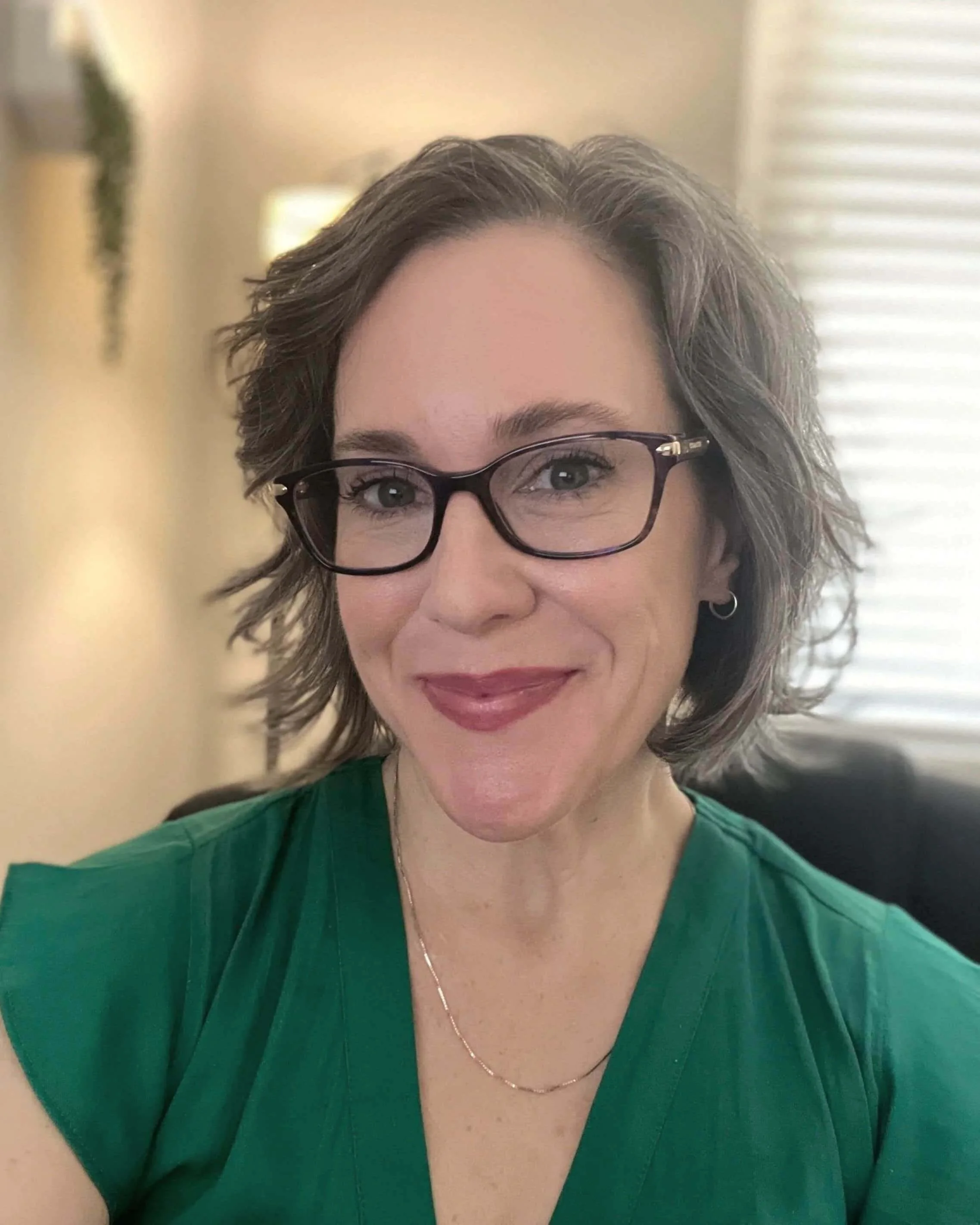
Amanda Morris, MSW, LCSW-BACS, CFSW — Providing space for high-achieving women to drop the mask and find real relief.Who I Do My Best Work With
Most of my clients look incredibly put-together on the outside:
High-Achieving & Capable: You are successful, dependable, and the person everyone else relies on.
Quietly Overwhelmed: Privately, you feel unseen, unsteady, and like you are one more demand away from completely falling apart.
Tired of Surface-Level Advice: You don't need generic coping strategies—you need deep, meaningful change.
I don't do cookie-cutter therapy or hand you a worksheet to call it a day. We will get to the root of what is driving your anxiety and people-pleasing so you can experience real relief from the inside out.
In-person therapy sessions are available in Baton Rouge, Louisiana, along with telehealth therapy for clients across Louisiana, Florida, and Virginia.Is This the Right Fit?
ANXIETY THERAPY MAY BE A GOOD FIT IF YOU:
Feel exhausted from constant caretaking and have little energy left for yourself.
Struggle to set boundaries, say "no," or ask for what you need without overwhelming guilt.
Experience ongoing anxiety, particularly in your relationships or social interactions.
Feel disconnected from your own identity, wants, or feelings after years of accommodating others.
Have tried to "just relax" or "stop caring so much"—and found that generic advice doesn't work.
Want deep, lasting change by understanding underlying patterns, not just temporary symptom relief.
Are looking for a non-judgmental space to slow down, feel heard, and think clearly.
THIS MAY NOT BE THE RIGHT FIT IF YOU:
Are in immediate crisis or active physical danger (if so, please call 988 or 911 for immediate emergency support).
Are seeking short-term, skills-only therapy with no interest in exploring deeper relational patterns.
Are looking for psychiatric medication management (I am a Licensed Clinical Social Worker, not a prescribing medical provider).
Are seeking couples therapy (my practice is dedicated exclusively to individual therapy for women).
Not Sure If This Is Right for You?
You don't have to have it all figured out before reaching out. Schedule a free consultation, and we can talk through what you're experiencing to see if working together makes sense for you.
You're Allowed to Want More for Yourself
You've spent so much time making sure everyone else is okay. You've talked yourself out of your own needs so many times that taking a back seat has become automatic. Somewhere along the way, you started to believe this is just who you are.
It isn't. The people-pleasing, the chronic anxiety, the constant vigilance—these are learned patterns. And because they were learned, they can be unlearned.
You don't have to have everything figured out before you reach out. You don't need to wait until you are in crisis to justify taking care of yourself. You just have to acknowledge that the way things are isn't working anymore—and that you deserve support.

Other Ways to Work Together
In addition to individual anxiety therapy, I offer specialized group and intensive options for women seeking community connection or an accelerated format:
Unmasking Group for Autistic & AuDHD Women
A neurodiversity-affirming space to unlearn social camouflage, set self-protective boundaries, and practice authentic connection without the performance.
Learn more about the Unmasking Group →
Emotional Abuse Recovery Group
A structured, supportive community for neurodivergent women rebuilding self-trust, processing relational trauma, and untangling gaslighting in a safe environment.
Learn more about the Recovery Group →
Half-Day Therapy Intensives
An accelerated, focused format designed to help you process deep relational trauma or autistic burnout in dedicated blocks—bypassing the week-to-week wait of traditional therapy.
Frequently Asked Questions About Anxiety Therapy
-
Yes—and it's actually one of the most transformative things therapy can work on. People-pleasing is a deeply ingrained pattern that often has roots in early attachment and relationship experiences. It doesn't respond well to just trying harder or thinking positively. Therapy helps you understand the why behind it, so you can start making real changes—not just white-knuckling your way through.
-
If your anxiety is affecting your relationships, your ability to make decisions, your sleep, or your sense of self—it's worth talking to someone. You don't need to be in crisis to deserve support. The free 20-minute consultation is a low-pressure way to find out if therapy might help.
-
Not necessarily—and definitely not before you're ready. My approach is to follow your lead. That said, understanding where these patterns came from can be incredibly helpful in changing them. If and when it feels relevant, we'll go there at your pace.
-
I am transitioning to a fully private-pay practice as of October 1, 2026. Individual sessions are $250 for 55 minutes. I can provide a superbill for out-of-network reimbursement, and I work with Thrizer to help clients access their out-of-network benefits. A free 15-minute consultation is always available.
-
Yes. I offer telehealth therapy to clients in Louisiana, Florida, and Virginia, in addition to in-person sessions at my Baton Rouge office.
-
Then you're in the right place. Most people who reach out aren't entirely sure what's going on—they just know something isn't right. We can sort it out together. Start with the free consultation, and we'll go from there.
Ready to Stop White-Knuckling Through Your Day?
Taking the first step can feel intimidating—especially when you're used to handling everything on your own. You don't need to have all the answers or the right words prepared. Just bring yourself.
Schedule a free 15-minute phone consultation. We’ll talk about what you’re experiencing, answer any questions you have, and decide together if we're a good fit.
In-person therapy in Baton Rouge, LA • Telehealth across Louisiana, Florida, and Virginia