

therapy for autistic women in baton rouge
Recovering From Emotional Abuse, Relational Trauma & Autistic Burnout — With a Therapist Who Actually Gets It
You’re exhausted from masking, second-guessing your reality, and navigating a nervous system that has been running on high alert for years. This is a trauma-informed, neurodiversity-affirming space where you don't have to carry the pressure of performance.
Licensed Clinical Social Worker | AuDHD TherapistYou Belong Here.
WHO I WORK WITH
Autistic women (ages 21+)
AuDHD & ADHD women
Neurodivergent women
Sensory processing issues
Diagnosed, self-identified or just starting to wonder
WHAT WE WORK ON
Emotional and narcissistic abuse recovery
Relational trauma
Autistic burnout
Masking exhaustion
Late-diagnosis integration
HOW WE MEET
In person in Baton Rouge, LA
Telehealth: LA, FL & VA
Individual therapy
Group therapy
Half-day intensives
Free 15-min. consultation
THE HEALING JOURNEY
You’ve Spent Your Whole Life Trying To Make Sense Of Yourself.
You've probably spent decades being told you're "too sensitive," "too much," or "overreacting." Maybe by your family growing up. Maybe by teachers, friends, partners, bosses. You learned early that something about how you experience the world doesn't match what's expected — so you got very good at performing the version of yourself that other people could handle.
And then, somewhere along the way, you ended up in a relationship where your partner used those exact same words to make you doubt yourself.
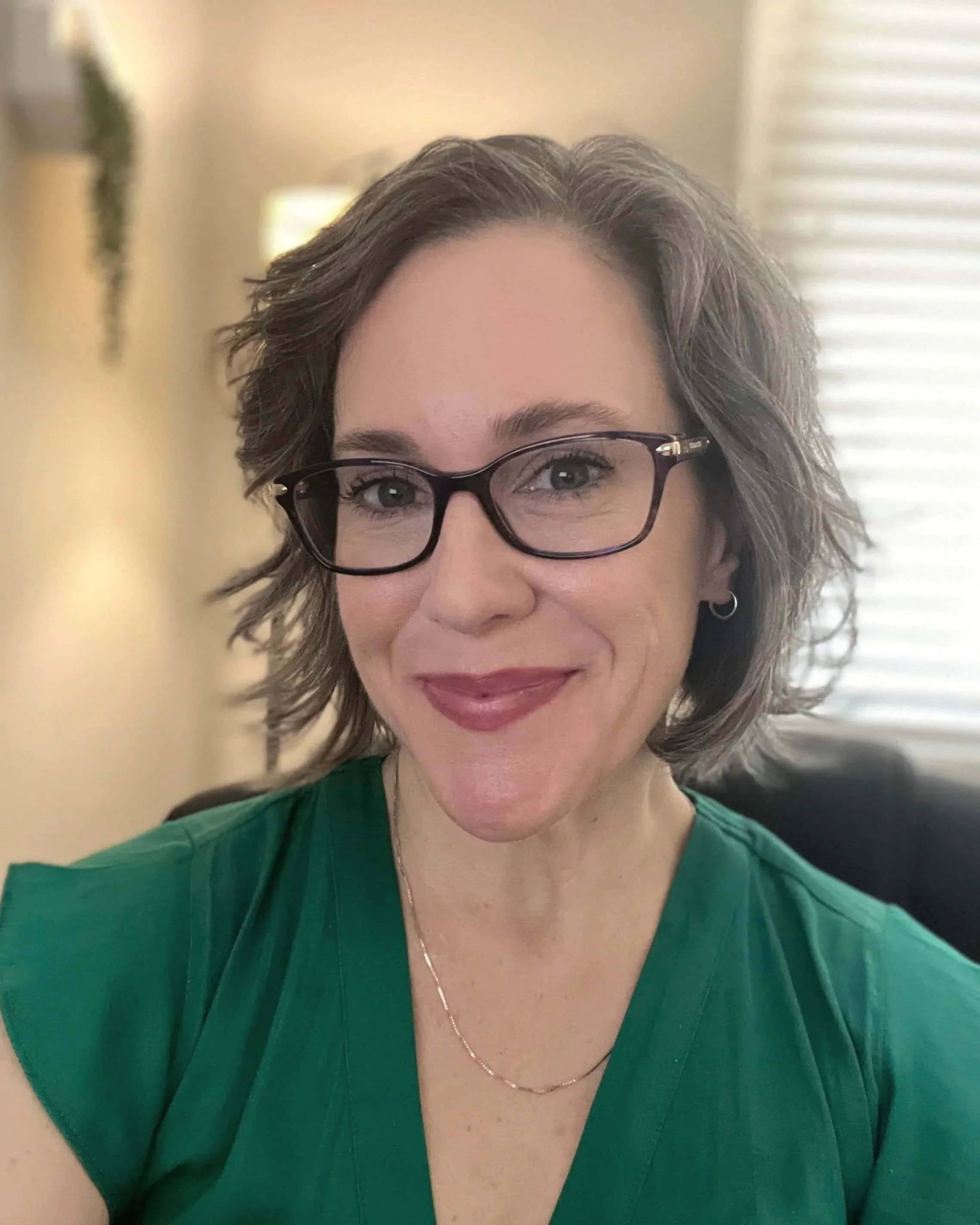
I'm Amanda Morris, and I Truly Get It.
I am a Licensed Clinical Social Worker with 25 years of experience — and an AuDHD therapist with specialized training in neurodiversity-affirming care. I work with autistic, AuDHD, and neurodivergent women recovering from emotional abuse, relational trauma, and autistic burnout. You don't need an official diagnosis to belong here.
IF THIS SOUNDS FAMILIAR
Many Of the Women I Work With Have Lived a Particular Kind of Confusing Life:
The Unseen Gap: You've spent decades feeling like you don't quite "fit," even when nobody could tell you why.
The Labels: You've been called "too much," "too sensitive," "intense," or "dramatic" — by family, partners, bosses, teachers, and friends.
The Performance: You've built an exhausting set of routines, scripts, and performances to make yourself acceptable to other people.
The Weaponization: You ended up in a relationship (or several) where your partner weaponized those same labels to make you doubt yourself.
The Misdiagnoses: You've been diagnosed and re-diagnosed — anxiety, depression, OCD, complex PTSD, "high-functioning" something — and none of it ever quite fit.
The Through-Line: You're starting to suspect that the through-line all along has been autism, ADHD, or AuDHD.
The Exhaustion: You're tired in a way that sleep doesn't touch.
Whether you’ve been officially diagnosed or not doesn’t matter. A lot of the women I work with are still figuring it out.

Where does your energy actually go?
A short Energy Audit for late-identified autistic and neurodivergent women. See where masking is draining you, and what to do about it.
Take the Energy Audit →How Emotional Abuse Lands Differently When You're Autistic Or Neurodivergent
This is the heart of my practice—and the critical piece so many therapists may overlook.
When you are neurodivergent, emotional abuse, narcissistic control, and relationship trauma hit differently. The damage often targets your specific neurotype:
Masking makes you a prime target. A lifetime of overriding your sensory needs and accommodating others doesn't stop when you fall in love. It conditions you to accept dynamics where putting someone else first feels normal, and advocating for yourself feels dangerous.
Gaslighting exploits a nervous system trained to doubt itself. Most survivors question their reality, but autistic women are especially vulnerable after decades of being told they read social cues "wrong." It becomes nearly impossible to distinguish between genuine social subtext and calculated manipulation. We untangle that together.
Rejection sensitivity locks you in place. Rejection Sensitivity Dysphoria (RSD) isn't codependency or a character flaw—it is a physiological response of a neurodivergent nervous system. When paired with a partner's cycles of withdrawal and love-bombing, it creates an intense attachment loop that makes leaving feel catastrophic.
Your safe havens are weaponized. Controlling partners frequently target the exact mechanisms you use to regulate: your special interests, daily routines, hyperfixations, and sensory environments. Stripping away your self-soothing tools isn't a byproduct of the abuse—it's a control tactic.
A late diagnosis shifts the ground beneath you. Realizing you are autistic or neurodivergent forces you to reframe your entire relationship history. While deeply validating, this process can feel overwhelming. True recovery involves integrating this new self-knowledge while protecting your peace.
Ready to Trust Your Reality Again?
If you recognize your experience in these words, you don't have to navigate the unlearning alone.
What Does Autistic Burnout Look Like?
For many of the women I work with, autistic burnout shows up alongside or after the relational trauma — sometimes long after they've left the relationship.
Autistic burnout isn't just "being tired." It's a particular kind of nervous-system collapse that happens after years — often decades — of masking, accommodating, and pushing through. It can look like:
Exhaustion that sleep doesn't fix
Sudden loss of skills you used to manage easily — driving, conversations, basic decisions
Sensory sensitivities that have ramped up to the point of being unbearable
A flat, numb, "can't access myself" feeling
Increased anxiety, depression, or shutdown
A growing inability to mask, even when you want to
It often gets misdiagnosed as depression, chronic fatigue, or "just stress." It isn't. It's what happens when a nervous system has been running someone else's program for too long.
HOW WE WORK THROUGH IT
The work isn't to "push through." It's to put down what's been costing you, and rebuild your life around what your nervous system actually needs.
I treat autistic burnout as a recognized pattern that emerges from long-term masking, relational trauma, and nervous-system overload. My approach is trauma-informed and somatic — focused on regulation, recovery, and learning to live in your body again.

What is Therapy For Autistic Women Like?
This isn't a place where you have to keep masking. You don't have to make eye contact. You don't have to perform "attentive and engaged" if you're still processing. You don't have to come with an “acceptable” story about what's wrong. Stimming is welcome. So is bluntness. So is silence. So is needing extra time to find the words.
What we work on:
Untangling abuse, masking, and authenticity. What was actually happening to you, what you did to survive it, and what's just you, finally separated out.
Nervous-system recovery from burnout. Coming down from years of overload. Learning what regulation actually feels like, sometimes for the first time.
Sensory and routine reclamation. Putting back what was taken, mocked, or pruned away. Building a life around your wiring, not against it.
RSD and emotional regulation, without shame. Recognizing rejection sensitivity for what it is and developing skills that respect your nervous system, instead of demanding it act like someone else's.
Rebuilding self-trust. When you've been told your perceptions are wrong for decades by family, by partners and the world, coming back to your own understanding is the work. We go at your pace.
Identity integration after late diagnosis (or suspected diagnosis). The grief, the relief, the anger, the "what if I'd known sooner." All of it gets room.
Some clients also benefit from Accelerated Resolution Therapy (ART), a structured, step-by-step approach to processing painful memories. Many of my neurodivergent clients like that it's predictable, doesn't require retelling everything, and keeps you in control the whole time.
Ready to see if we’re a fit?
Who I Work With
I work with autistic, AuDHD, and neurodivergent adult women (ages 21+) across Louisiana, Florida, and Virginia — offering in-person therapy in Baton Rouge, LA, and telehealth across all three states.
THIS IS A GOOD FIT IF YOU:
Are autistic, AuDHD, or questioning: Formally diagnosed, self-identified, or exploring (no official diagnosis required).
Are healing from relational trauma: Recovering from emotionally abusive, narcissistic, or controlling dynamics.
Are in autistic burnout: Experiencing chronic nervous-system collapse, masking exhaustion, or skill regression.
Are untangling your identity: Sorting through what was abuse, what was survival masking, and who you are underneath.
Want neurodiversity-affirming care: Looking for a therapist who honors your neurotype rather than trying to "fix" it.
THIS MAY NOT BE A FIT IF YOU:
Are in active crisis or physical danger: If you need immediate emergency support, please call 988 or 911. I cannot provide the level of safety planning required for active physical domestic violence.
Are seeking a formal autism or ADHD evaluation: I provide therapy, not diagnostic testing. I can refer you to trusted neuropsychologists if you need formal assessment.
Want short-term or purely behavioral therapy: My approach is deep, trauma-informed, and somatic—not a quick-fix, although we can also work on skills to help you manage sensory sensitivities, social difficulties and executive dysfunction.
Other Ways To Work Together
In addition to traditional 1-on-1 therapy, I offer specialized group and intensive options designed for neurodivergent women seeking deeper support or community connection.
Unmasking Group for Autistic & AuDHD Women
A neurodiversity-affirming space to unlearn social camouflage, set self-protective boundaries, and practice authentic connection without the performance.
Learn more about the Unmasking Group →Emotional Abuse Recovery Group
A structured, supportive community for neurodivergent women rebuilding their self-trust, processing relational trauma, and untangling gaslighting in a safe environment.
Learn more about the Recovery Group →Half-Day Therapy Intensive
An accelerated, focused format designed to help you process deep relational trauma or autistic burnout in dedicated blocks — bypassing the week-to-week wait of traditional therapy.
Explore Therapy Intensives →Common Questions About Therapy For Autistic Women
-
No. Many of the women I see are self-diagnosed, exploring, or just starting to wonder if they might be autistic or AuDHD. You're welcome here either way.
-
No, but I do provide screening for Autism. I work with women who are already diagnosed, self-diagnosed, or exploring — and I can refer you to neuropsychologists in your state who do testing if you want a formal evaluation.
-
Yes. The not-knowing is often where we start. Many of my clients haven't named what happened to them yet. Therapy helps you see your experience clearly without anyone — including me — telling you what it has to mean.
-
Both can be true at the same time, and often are. A lot of what gets labeled "trauma" in autistic women is decades of the world misreading them, plus the actual relational damage that often follows. We sort it out together.
-
In person: I don’t use the overhead light and can adjust the blinds to your comfort level. I have fidgets available, or you can bring your own.
In telehealth you're welcome to: dim your lights, turn off video if you need to, have a fidget, sit on the floor, skip eye contact, take silences, ask me to repeat things, ask me to speak more directly, or tell me when something isn't working. Telehealth is often a better sensory fit than office sessions, but either works.
-
I am currently in-network with Cigna, Optum, and United Healthcare as I transition toward a fully private-pay practice on October 1, 2026. Private pay sessions are $250 per 55-minute session. Superbills are available for out-of-network reimbursement.
Sliding scale spots are currently full.
Ready to Get Started?
The next step is a free 15-minute consultation. It's just a chance to talk briefly, see if we're a good fit, and answer any questions.
You don’t have to keep masking your way through life.